
Blue-tongue Skink (Ambassador Animal)
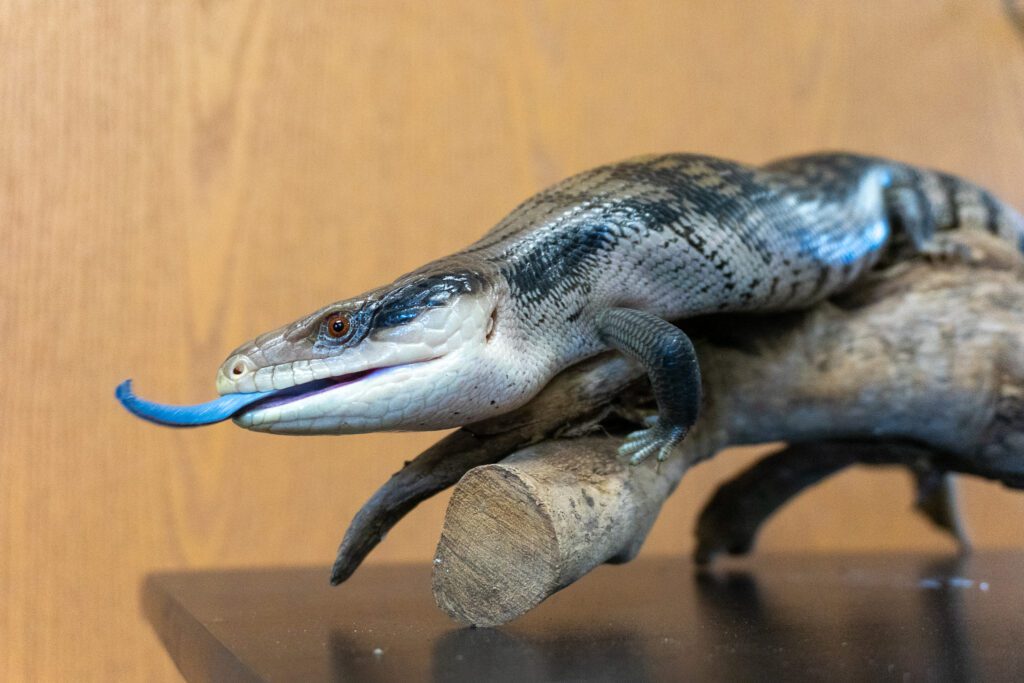
Blue-tongue Skink (Ambassador Animal) (Tiliqua scincoides intermedia) Reptiles Australia The Zoo is home to one Blue-tongued Skink as part of our ambassador animal program (habitat not on public display). Animal […] The post Blue-tongue Skink (Ambassador Animal) appeared first on Seneca Park Zoo.
Blue-tongue Skink (Ambassador Animal) (Tiliqua scincoides intermedia) Reptiles Australia The Zoo is home to one Blue-tongued Skink as part of our ambassador animal program (habitat not on public display). Animal Facts Blue-tongued Skinks are large, robust lizards with cylinder shaped bodies, wide, flattened heads, and short legs. They are known for their prominent blue tongues, which they use to hunt prey, ward off predators, and attract mates. Blue-tongued skinks are well-adapted for crawling into burrows and other hiding spots for shelter and food. They have also adapted to living in suburban areas with large backyards that provide shelter. They enjoy basking in sunny paths and lawns. Blue-tongued skinks have a “third eye” or a pineal gland on the top of their head to detect changes in light. This helps alert them to predators like birds of prey. Females are ovoviviparous, so they give birth to live young outside of the egg sacs they develop inside their bodies. The blue color in their tongue comes from guanine crystals in the tongue’s cells, which reflect light to make the tongue appear bright. Their tongue also reflects UV light, with the back of their tongue reflecting twice as much as the front of the tongue. Diet Omnivorous. Insects, snails, fruits, berries, wildflowers, and carrion Status in The Wild Least Concern International Union for Conservation of Nature (IUCN) Red List status Main threats are invasive species and human conflict. The invasive cane toad is a significant threat to the blue-tongue skink as they are poisonous and can cause significant harm to the skinks. They can also be hurt by pesticides such as snail baits. Skinks can eat snails and slugs, as well as other invertebrates that have been poisoned, and then be poisoned themselves. Learn About Our Conservation Efforts Browse Animals By Region Africa Arctic Circle Asia Central America North America South America By Class Amphibians Birds Fish Invertebrates Mammals Reptiles The post Blue-tongue Skink (Ambassador Animal) appeared first on Seneca Park Zoo.